Clearing Identity Barriers for Swift Mobile Access in High-Volume Soccer, Racing, and Casino Sessions
Casey Keller · Jul 7, 2026

Clearing Identity Barriers for Swift Mobile Access in High-Volume Soccer, Racing, and Casino Sessions
Account verification forms the foundation for portable wagering platforms that handle soccer markets, equine events, and table spins, since regulatory frameworks require operators to confirm user identities before processing transactions or allowing bets. Data from industry reports indicates that most platforms request government-issued identification, proof of address, and sometimes selfie verification to comply with anti-money laundering standards, while peak periods such as major league finals or major racing festivals create simultaneous demand spikes that test these systems.
Core Verification Steps on Mobile Platforms
Users typically upload documents through app interfaces that employ optical character recognition to extract details automatically, and completion times range from minutes to several hours depending on document clarity and server load. Research from European betting associations shows that automated checks clear straightforward cases quickly, yet manual reviews become necessary when discrepancies arise, such as mismatched addresses or expired documents. Observers note that platforms serving soccer in-play markets often prioritize faster processing for established users, whereas new accounts face fuller scrutiny before accessing equine ante-post pools or rapid table spin sessions.
Pressure Points During Peak Windows
July 2026 brought heightened activity across multiple events, with overlapping international tournaments and racing meets driving mobile traffic to record levels according to aggregated platform metrics. Verification queues lengthened as thousands attempted logins within narrow timeframes, and connection timeouts occurred when document uploads coincided with live odds updates for soccer matches or last-minute equine entries. Those who studied user behavior patterns found that delays hit hardest during evening windows when table spin volumes also surged, creating bottlenecks that affected funding and bet placement simultaneously.
Accessing Immediate Support Channels
Live chat functions embedded in apps provide direct routes to agents trained on verification troubleshooting, while callback options and in-app messaging allow users to escalate issues without leaving the platform. Industry data reveals that response averages sit under two minutes during standard hours, though peak surges push wait times higher unless operators deploy additional staff or AI-assisted triage. People who navigate these systems report success when they prepare alternative documents in advance, since support teams can often approve uploads on the spot once initial checks pass.
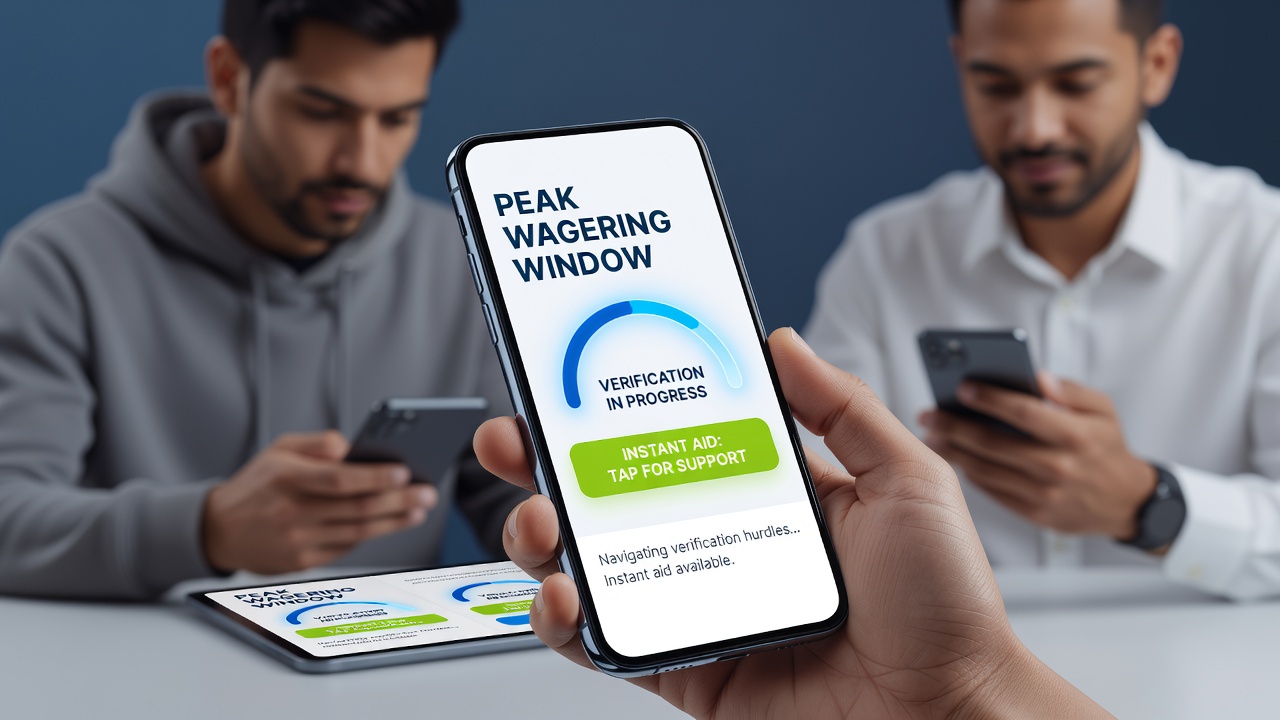
Phone lines remain available for complex cases involving international identification or technical glitches, and several platforms integrate video verification calls that resolve matters within a single interaction. According to findings from the Australian Institute of Family Studies, structured support reduces abandonment rates during high-pressure periods by guiding users through re-submission steps without forcing full restarts.
Market-Specific Timing Considerations
Soccer markets demand rapid verification because in-play betting windows close quickly after goals or cards, so platforms route these accounts through expedited paths once basic identity confirmation succeeds. Equine events require pre-race funding that aligns with declaration times, and delays here can exclude users from pools that close minutes before post time. Table spin sessions operate on continuous cycles, yet verification holds still interrupt momentum when new users attempt deposits mid-session, prompting operators to flag these accounts for priority assistance queues.
Strategies That Reduce Friction
Pre-verification during off-peak hours allows seamless transitions into busy periods, while saving multiple document formats on devices speeds re-uploads if initial scans fail. Platform notifications alert users to impending deadlines for additional information, and those who respond promptly avoid lockouts that would otherwise block access to soccer accumulators, racing exotics, or progressive spin jackpots. External resources such as Responsible Gambling Council guidelines outline preparation techniques that align with operator requirements across regions.
Regulatory Context and Platform Adaptations
Updated standards effective in several jurisdictions by mid-2026 emphasize real-time monitoring alongside verification, pushing operators to refine mobile tools that detect suspicious patterns without halting legitimate activity. Data shared by the European Gaming and Betting Association highlights investments in cloud-based verification services that scale during surges, reducing average clearance times by measurable margins. These adaptations maintain compliance while supporting uninterrupted access to the three core markets.
Conclusion
Effective navigation combines advance preparation with responsive support tools that address verification delays before they impact live betting opportunities. Platforms continue refining these processes to handle volume spikes across soccer, equine, and table spin offerings, while users who maintain updated records and utilize available channels experience fewer interruptions during critical windows.